
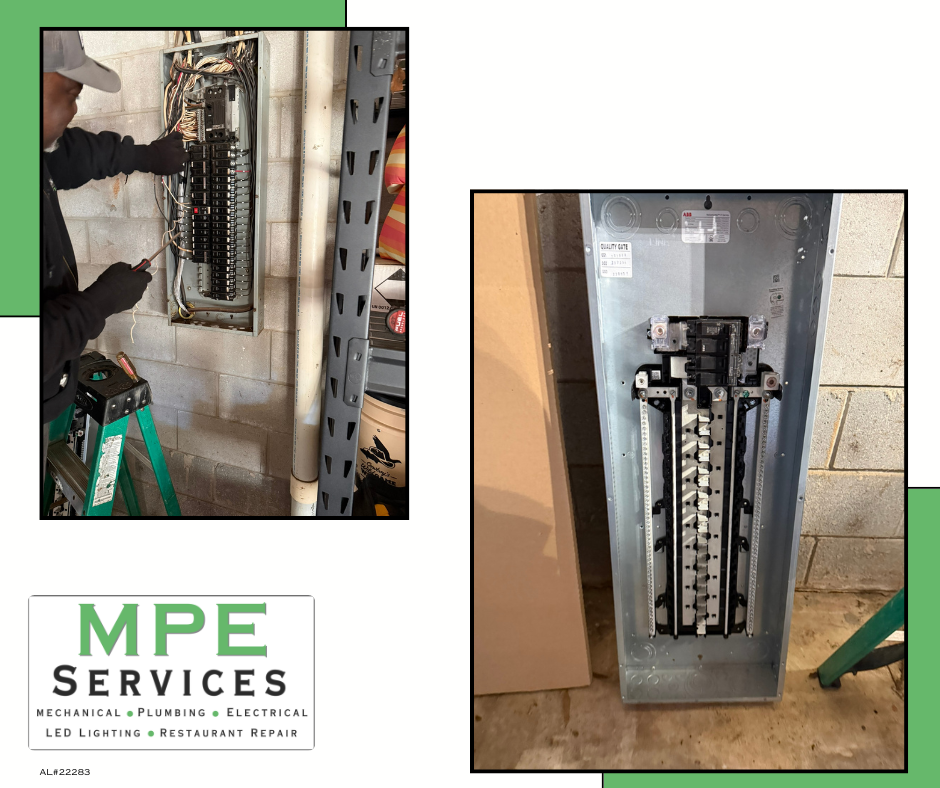
Is Your Home Keeping Up? Why Older North Alabama Homes Need an Electrical Panel Upgrade
From the historic properties in Huntsville to the mid-century ranches of Madison and Florence, our power demands have changed. If your lights are flickering or your breakers are constantly tripping, your home might be struggling to keep up. Discover why upgrading your electrical panel is the smartest safety move you can make this season.
From the stunning historic properties in the Twickenham district of Huntsville and the historic downtown of Florence, to the mid-century ranch homes scattered throughout Madison, North Alabama is full of neighborhoods with incredible character.
However, while older homes offer timeless architecture, their original electrical systems were never designed to handle the realities of 2026 living.
Between electric vehicle (EV) home chargers, high-efficiency heat pumps, modern kitchen appliances, and multiple family members streaming and gaming simultaneously, our daily power demands have skyrocketed. If your home still relies on its original electrical panel, it might be struggling to keep up.
What Exactly is an Electrical Panel?
Think of your electrical panel (often called a breaker box) as the traffic cop for your home’s electricity. It takes the main power line coming from your local utility provider and safely distributes it to separate circuits throughout your house.
If a circuit draws too much power, the breaker trips to stop the flow of electricity before the wires overheat and cause a fire.
4 Signs Your Home is Overdue for an Electrical Panel Upgrade
1. Flickering or Dimming Lights
Do your living room lights briefly dim when your air conditioner kicks on or when you run the microwave? This is a textbook sign that your current panel doesn't have the capacity to distribute power smoothly, causing a localized "brownout" in your own walls.
2. Constantly Tripping Breakers
Breakers are designed to trip for your safety. However, if you find yourself constantly walking down to the basement, garage, or hallway to flip a switch back on just because you tried to use a hairdryer and a space heater at the same time, your circuits are dangerously overloaded.
3. The Presence of Dangerous Outdated Brands
If your home was built between the 1950s and 1980s, check the brand name on your panel box door. If you see Federal Pacific (FPN) or Zinsco, you need an immediate inspection.
Safety Warning: These specific legacy brands are notorious for failing to trip during an overload, which has led to thousands of house fires nationwide. Many home insurance companies in Alabama will now refuse to renew policies until these specific panels are replaced.
4. You Are Still Using a Fuse Box
If your home uses screw-in glass fuses instead of flip-switch circuit breakers, your system is heavily outdated. Fuse boxes generally max out at 60 amps of power, whereas a standard modern home requires a minimum of 150 to 200 amps to operate safely and efficiently.
The Benefits of Upgrading Your Electrical Service
An electrical panel upgrade is one of the smartest investments you can make for your property. It provides:
Unmatched Safety: Brand new, highly sensitive circuit breakers dramatically lower the risk of electrical fires.
Room for Growth: Gives you the electrical capacity to confidently add an EV charger, hot tub, or remodel your kitchen.
Lower Insurance Premiums: Many insurance providers offer lower rates or concrete discounts once a certified electrician certifies that an outdated panel has been replaced.
Ensure Your Peace of Mind with Local Experts
Electrical work is never a DIY project. Upgrading a panel requires safely disconnecting the main power supply to the home, coordinating with local utility crews, and ensuring every circuit is perfectly balanced to meet local North Alabama building codes.
Whether you are preserving a historic gem or modernizing a family home, our licensed electricians are ready to inspect your system and provide a seamless, safe installation.
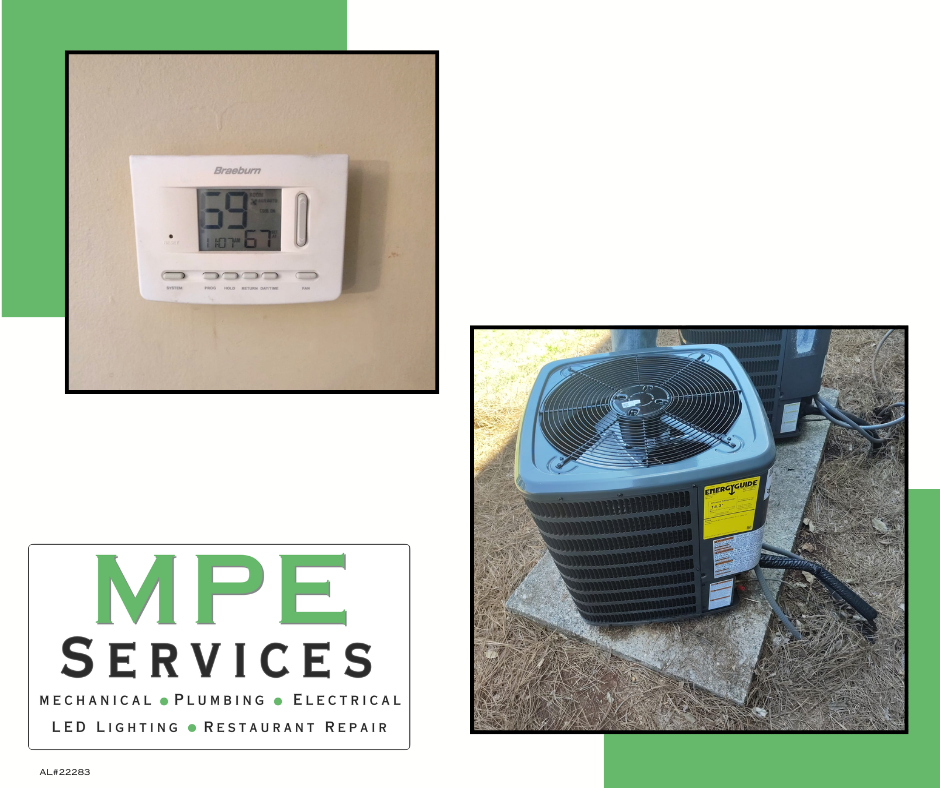
Why is My AC Turning On and Off Rapidly? Understanding Short-Cycling
When summer hits high gear in North Alabama, your air conditioner is the most important appliance in your home. Under normal conditions, an AC unit should run continuously until it cools your home to the thermostat setting, shut off for a while, and then start back up later.
But if you notice your system is turning on, running for just two or three minutes, shutting down, and then repeating the loop over and over—you are experiencing a phenomenon called short-cycling.
Short-cycling is a major warning sign. Not only does it destroy your home’s comfort, but it also spikes your electric bills and puts immense wear and tear on your equipment.
Why Short-Cycling is an HVAC Emergency
An air conditioning system uses the most electricity during its startup phase. When it cycles constantly, your power bill will skyrocket.
More importantly, your compressor—the expensive "heart" of your AC unit—isn't designed for constant stop-and-start operation. Ignoring a short-cycling system is the fastest way to turn a minor maintenance issue into a major, costly AC repair or a total system replacement.
The 4 Most Common Causes of AC Short-Cycling
1. A Heavily Clogged Air Filter
This is the simplest fix, but it's the cause of a massive percentage of service calls. When your air filter is packed with dust, pet dander, or pollen, it restricts the airflow into the system. The indoor cooling coils freeze up due to the lack of warm air, causing the system to automatically shut down to protect itself. Once the ice melts slightly, it starts up again, creating a vicious cycle.
2. Low Refrigerant Levels
Your system relies on a precise charge of refrigerant to pull heat out of your home. If there is a tiny leak in your coils, the drop in pressure can trip the system's low-pressure safety switch, cutting power to the compressor.
3. Faulty Thermostat Placement or Sensors
If your thermostat is located right next to a drafty window, an air vent, or a heat-producing appliance, it gets "confused." It thinks the house is cool before it actually is, shuts the AC down, and then quickly registers the heat again, triggering the unit back on.
4. The System is Over-Sized for Your Home
If you recently had a new unit installed by a company that didn't run proper load calculations, your AC might be too powerful. An oversized unit will blast a house with cold air so quickly that it shuts down before it has a chance to actually remove the humidity from the air, leaving your home feeling cold but damp and clammy.
How to Handle a Short-Cycling AC
If your system is short-cycling, turn it off at the thermostat immediately to prevent compressor burnout. Check your air filter—if it looks grey and choked with dust, swap it out for a clean one and see if the system returns to a normal run cycle.
If a clean filter doesn't fix the issue, the problem is likely internal, involving electrical controls or refrigerant pressure.
Schedule Your Summer Comfort Rescue
Don't spend your weekend suffering through the North Alabama heat with an unreliable system. Our certified NATE technicians are stationed right here across Huntsville, Madison, and Florence, ready to diagnose the root cause of your system's issues and get it running efficiently again.

Understanding Hard Water and Its Impact on Residential Plumbing Systems in North Alabama
Hard water is a widespread issue throughout North Alabama, quietly degrading pipes, shortening appliance lifespans, and reducing water heater efficiency over time. MPE Services explains how mineral scale forms, what signs to watch for, and how a whole-home water filtration system can protect your plumbing infrastructure and improve water quality at every tap.
Water hardness — defined by the concentration of dissolved calcium and magnesium ions in the water supply — is a widespread condition throughout North Alabama and much of the southeastern United States. While hard water does not present a direct public health concern, its effects on residential plumbing infrastructure, water-using appliances, and domestic water quality are substantive and cumulative. Over time, untreated hard water imposes measurable costs on homeowners through accelerated equipment wear, reduced appliance efficiency, and increased maintenance requirements. MPE Services installs whole-home water filtration and softening systems that address these conditions at the point of supply entry.
The Mechanism of Scale Formation
When hard water is heated or allowed to evaporate — as occurs continuously within water heaters, pipes, dishwashers, and coffee makers — the dissolved calcium and magnesium carbonate compounds precipitate out of solution and deposit as a crystalline mineral scale. This scale accumulates progressively on interior pipe surfaces, heat exchanger elements, valve seats, and appliance components. In water heaters, a scale layer as thin as one-quarter inch can reduce thermal efficiency by 20 to 30 percent, significantly increasing energy consumption and accelerating tank deterioration.
Observable Indicators of Hard Water
Homeowners experiencing hard water conditions commonly observe: white or yellowish mineral deposits (limescale) around faucet aerators, showerheads, and drain fixtures; water spots and film on glassware, dishes, and stainless steel surfaces following washing; reduced lather production with soap and shampoo products; laundry that retains stiffness or appears dingy after washing with standard detergent quantities; and sediment sounds or reduced output temperature from water heaters approaching scale-related failure conditions.
Cumulative Infrastructure and Appliance Impact
The long-term financial consequences of unaddressed hard water extend beyond cosmetic inconvenience. Scale accumulation in supply piping gradually reduces internal diameter and flow capacity, elevating system pressure and accelerating fitting wear. Water heaters operating against a scale-insulated heating element consume disproportionate energy and fail prematurely — often years short of their rated service life. Washing machines, dishwashers, and ice makers experience analogous efficiency losses and elevated service frequencies. These cumulative costs typically far exceed the investment required for a whole-home treatment solution.
Whole-Home Water Treatment: System Architecture and Benefits
MPE Services installs whole-home water filtration and ion-exchange water softening systems at the main supply entry point, ensuring that treated water is delivered to every fixture, appliance, and outlet within the structure. Ion-exchange softeners replace calcium and magnesium ions with sodium ions, eliminating scale-forming potential. Comprehensive filtration systems may additionally address sediment, chlorine, chloramines, and other contaminants present in municipal or well water supplies. The resulting water quality improvement is experienced at every point of use throughout the home.
Operational and Quality-of-Life Benefits
Beyond infrastructure protection, treated water delivers meaningful improvements in day-to-day domestic experience. Soap and shampoo products lather more effectively with softened water, requiring smaller quantities per use. Laundered fabrics retain softness and color integrity over more wash cycles. Glassware and dishes emerge from dishwashers without mineral spotting. Many households report perceptible improvements in the taste and clarity of drinking water following filtration system installation. These operational benefits provide ongoing value that complements the long-term cost savings associated with reduced appliance wear.
Request a Water Quality Assessment
MPE Services provides professional water quality assessments and whole-home filtration system installations throughout Florence, Muscle Shoals, Madison, Huntsville, Decatur, Birmingham, and surrounding North and Central Alabama communities. To schedule your consultation, contact our team at 256-766-9439 or visit callmpe.com.
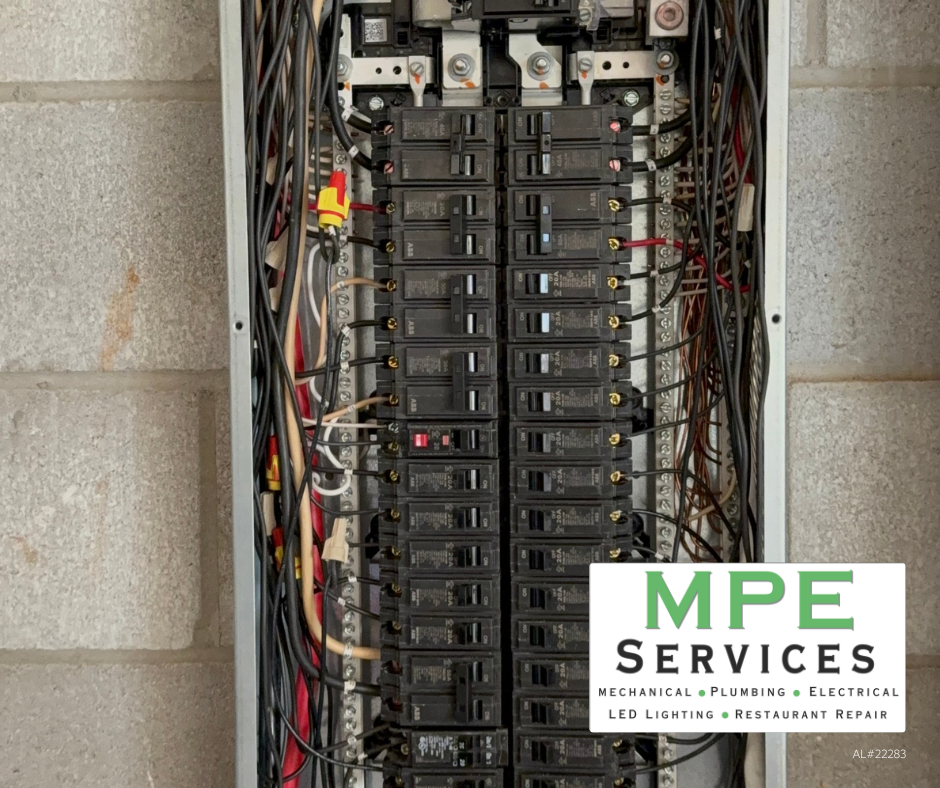
Residential Electrical Safety: Essential Knowledge for North Alabama Homeowners
Electrical deficiencies are responsible for thousands of house fires each year — and many are entirely preventable. MPE Services outlines the critical warning signs, risks associated with outdated wiring and aging panels, and the code requirements that every North Alabama homeowner should understand to keep their property safe.
Electrical system deficiencies are among the most prevalent causes of residential structure fires in the United States, accounting for tens of thousands of incidents and billions of dollars in property damage annually. A significant proportion of these events are attributable to identifiable and addressable conditions — outdated wiring, overloaded circuits, defective panels, and inadequate protective devices. At MPE Services, our licensed electricians serve residential and commercial clients throughout North Alabama with a commitment to system safety, code compliance, and long-term reliability.
Critical Warning Indicators Requiring Immediate Attention
Certain electrical symptoms warrant prompt professional evaluation without delay. These include: lights that flicker or dim without apparent cause; circuit breakers that trip repeatedly under normal load conditions; outlets or switch plates that are warm or discolored; a persistent burning odor without identifiable source; audible buzzing or crackling sounds emanating from walls, panels, or fixtures; and visible sparking at outlets or appliances. Any of these conditions may indicate an imminent fire or shock hazard and should not be deferred.
The Risk Profile of Aging Electrical Infrastructure
A substantial portion of the residential housing stock in North Alabama was constructed during periods when electrical standards were significantly less demanding than those currently in effect. Homes built prior to 1980 may contain knob-and-tube or aluminum branch circuit wiring — both of which present elevated risk profiles when subjected to modern electrical loads. Knob-and-tube systems lack a grounding conductor and are incompatible with today's three-prong devices and appliances. Aluminum wiring, particularly at connection points, is susceptible to oxidation and thermal expansion that can create loose, high-resistance connections — a documented fire hazard. Professional inspection and remediation of these systems is strongly recommended.
Electrical Panel Condition and Serviceability
The main electrical panel is the central distribution point for all branch circuits in a residential structure. Panels manufactured under certain historical brands — most notably Federal Pacific Electric (Stab-Lok) and Zinsco — have been the subject of extensive safety research documenting elevated failure rates in their overcurrent protection devices. Breakers in these panels may fail to trip under fault conditions, allowing dangerous current levels to persist in branch circuits. If your home contains one of these panel types, a consultation with a licensed electrician is advisable.
Ground Fault Circuit Interrupter (GFCI) Protection
The National Electrical Code (NEC) mandates GFCI protection at all outlets in kitchens, bathrooms, garages, unfinished basements, crawl spaces, outdoor locations, and other areas where moisture exposure is possible. GFCI devices monitor the differential current between the hot and neutral conductors; upon detecting an imbalance indicative of a ground fault, they interrupt the circuit within milliseconds — before a potentially lethal shock can occur. Homes that have not been updated to current GFCI requirements should be brought into compliance as a priority safety measure.
Circuit Capacity and Outlet Availability
Reliance on power strips, multi-outlet adapters, and extension cords as a permanent solution to outlet deficiency is a common and hazardous practice. These devices are designed for temporary use and carry rated load limits that are frequently exceeded in practice. The appropriate solution is the addition of dedicated circuits and properly installed outlets by a licensed electrician — a relatively modest investment that eliminates a persistent safety risk and improves the functionality of living spaces.
Schedule a Professional Electrical Inspection
MPE Services provides comprehensive electrical inspections, panel assessments, GFCI upgrades, wiring evaluations, and emergency electrical repair services throughout Florence, Madison, Huntsville, Birmingham, and North and Central Alabama. To schedule an inspection or request emergency service, call 256-766-9439 or visit callmpe.com.