
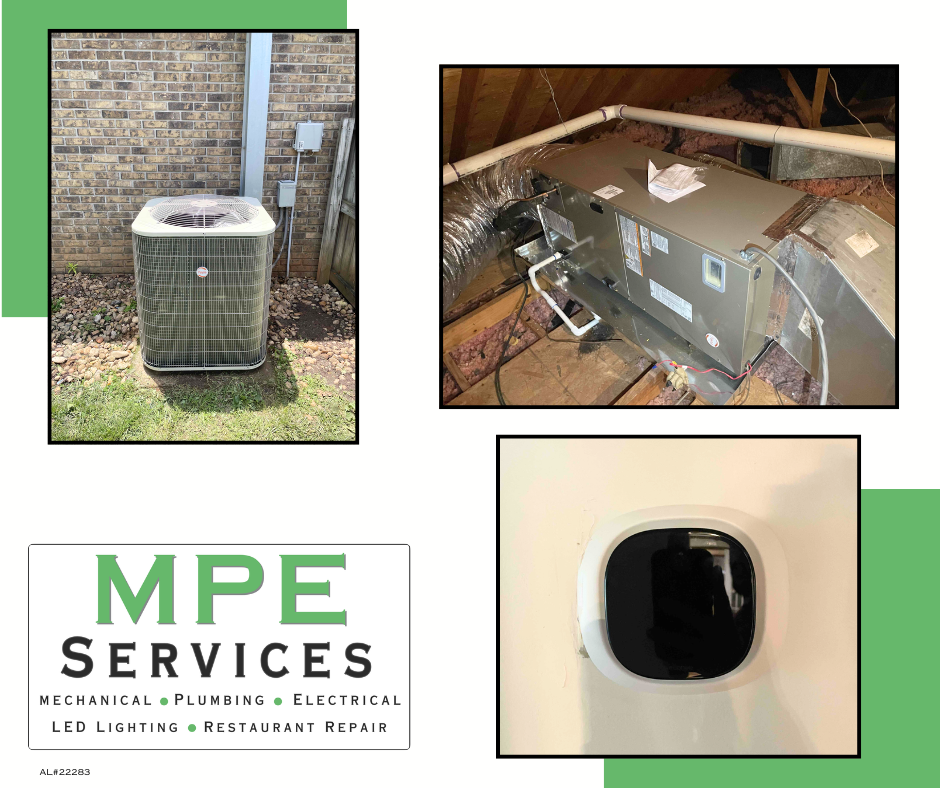
Beat the July Heat: How a Smart Thermostat Installation Lowers North Alabama Utility Bills
July heat is hitting North Alabama hard, sending residential power bills skyrocketing. A professional smart thermostat installation is the fastest, most cost-effective way to rein in your energy costs. Learn how modern devices adapt to your daily schedule, why older homes need expert wiring adjustments for proper power delivery, and how to stack local 2026 utility rebates from TVA and Alabama Power to put cash back in your pocket.
We’ve officially hit the peak of a classic North Alabama summer. Between the heavy humidity rolling off the Tennessee River and afternoon temperatures regularly climbing into the 90s, your air conditioning system is working harder right now than at any other point in the year.
If you’ve opened your latest utility bill from Huntsville Utilities, Florence Utilities, or Sheffield Utilities, you’ve likely felt the financial sting of keeping your home comfortable.
While upgrading to a new, high-efficiency hybrid heat pump is the ultimate way to slash your power consumption, there is a much smaller, incredibly affordable technology upgrade you can make today that yields immediate returns: a professional smart thermostat installation.
Why Standard Thermostats Waste Real Money in July
Traditional, non-programmable thermostats rely entirely on human memory. You have to remember to turn the temperature up before you leave for work in the morning and turn it back down when you arrive home.
If you forget, your AC unit spends all day cooling an empty house in Madison or Athens, burning through expensive electricity during peak utility hours.
Even basic programmable thermostats fall short because they operate on rigid schedules. If your weekend plans change or you stay out late, a rigid schedule wastes energy. Smart thermostats solve this by adapting to your life in real-time.
Stacking Local 2026 Rebates for Maximum Savings
The absolute best part about upgrading your thermostat right now is that local utility companies will help pay for it. Because smart climate control reduces strain on our regional electrical grid during blazing summer afternoons, multiple incentive programs are available:
TVA EnergyRight Smart Thermostat Rewards: If your local power distributor partners with TVA (like Decatur Utilities or Huntsville Utilities), you can unlock a $65 enrollment rebate just for registering a qualifying Wi-Fi thermostat, plus ongoing annual participation rewards.
Instant Marketplace Discounts: Purchasing your device directly through utility-approved online storefronts can instantly shave up to $100 off the retail price.
The Importance of Professional Installation
While many smart thermostats are marketed as quick DIY projects, older homes across the Tennessee Valley often present hidden wiring challenges.
Many modern, feature-rich Wi-Fi units require a dedicated C-wire (Common Wire) to deliver continuous, low-voltage power to the digital screen. If your older home's thermostat wall plate only has two or three wires, attempting to force-install a smart unit can cause it to "steal" power directly from your HVAC control board. This often leads to erratic system behavior, short-cycling, or blown fuses.
Our certified technicians can quickly assess your existing wiring, install a clean power adapter kit if a C-wire is missing, and ensure your new thermostat is perfectly calibrated to maximize your summer energy savings.
Ready to take control of your summer power bills? Let our team help you choose the perfect device, handle the technical wiring, and guide you through claiming your local utility rebates.
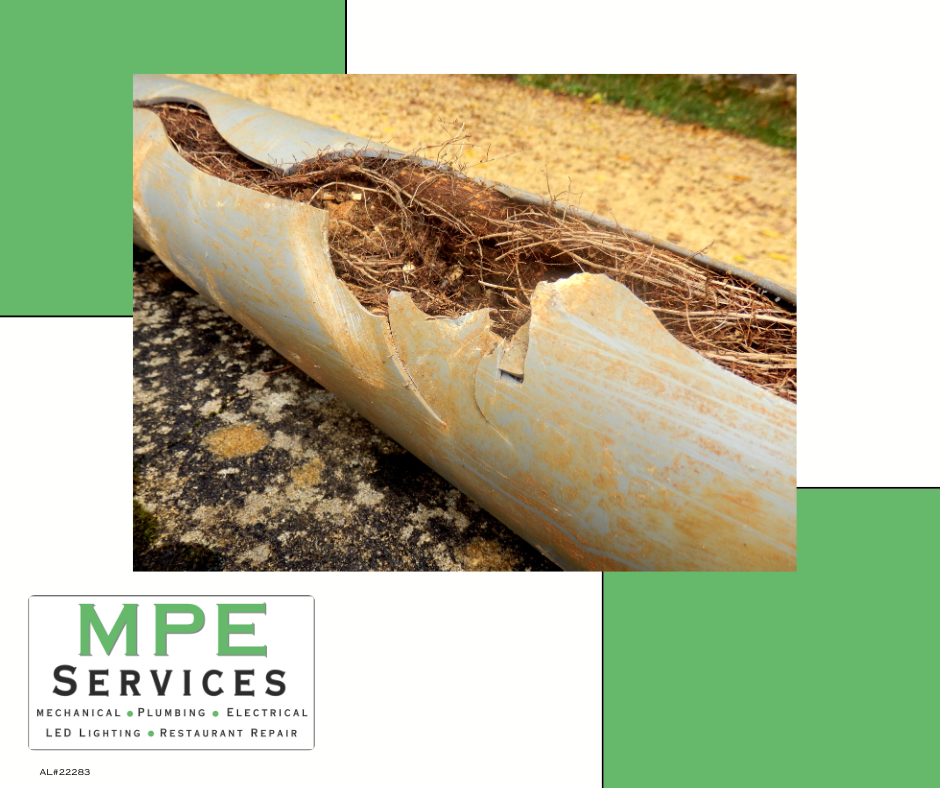
Saturated Soil and Broken Pipes: The Surprising Cause of Low Water Pressure After North Alabama Storms
Torrential downpours and flash flooding have completely saturated the ground across Huntsville, Madison, and Florence. But did you know that waterlogged clay soil can actually crush or snap your main water line? If your home is experiencing a sudden drop in water pressure following the recent storms, learn how underground shifting can trigger a plumbing emergency and how advanced leak detection can pinpoint the problem without destroying your yard.
Between the record-shattering downpours that triggered Flash Flood Emergencies in Huntsville and Madison, and the widespread street flooding stretching across Florence and the Shoals, North Alabama has been absolutely slammed with water lately.
When your yard looks more like a lake, the very last problem you expect to experience inside your home is a sudden drop in water pressure. It feels completely backwards.
However, local municipal water grids aren't always to blame when your showers turn into a weak trickle after a major storm. Often, the culprit is a hidden underground main line break right on your property. While it seems counterintuitive, extreme rainfall is actually one of the leading causes of underground plumbing failures.
How Heavy Rain Breaks Buried Pipes
The soil across the Tennessee Valley has an incredibly high clay content. This clay acts like a massive sponge. When we experience consecutive days of torrential downpours, the earth absorbs thousands of gallons of water, expanding rapidly and becoming immensely heavy.
This sudden, massive weight shift creates two major plumbing hazards:
The "Sinking Pipe" Effect: As the ground becomes oversaturated and turns to mud, it loses its structural stability. Heavy water lines buried underground lose their solid support system. The weight of the mud above presses down, causing the pipe to bend, warp, or completely snap at a joint.
Soil Erosion and Shifting: Rapidly moving groundwater can wash away the dirt directly beneath your plumbing infrastructure. Without support, the pipe shears under its own pressure, sending thousands of gallons of clean water shooting into the already flooded ground instead of up to your faucets.
3 Signs Your Low Water Pressure is an Active Main Line Leak
When the ground is already wet, identifying an underground plumbing leak requires a bit of detective work. Look for these three warning signs:
1. A "Bubbling" Spot in a Flooded Yard
While your yard might have puddles, keep an eye out for a specific area where water seems to be actively bubbling up, rippling, or churning long after the storm clouds have cleared. This indicates a pressurized line is pumping water to the surface.
2. Muddy or Discolored Tap Water
If a shifting pipe fractures underground, dirt and mud from our local clay soil can infiltrate the breach. If your sudden drop in water pressure is accompanied by brown, sediment-heavy, or sputtering water at your faucets, you are likely drawing in groundwater through a cracked line.
3. A Rapidly Spinning Water Meter
Locate your water meter box near the street curb. Turn off every single sink, washing machine, and appliance inside the house. If you open the meter lid and the flow indicator indicator is still spinning rapidly, water is actively escaping into your foundation or yard.
The Precision Solution: Advanced Leak Detection
Trying to find a broken water pipe in a completely saturated yard used to mean destructive, expensive guesswork—backhoeing trenches across a homeowner's landscaping just to find a single cracked seam.
Modern leak detection completely removes the guesswork. By deploying specialized digital acoustic equipment, ground-penetrating microphones, and pipe-tracing technology, a certified technician can isolate the exact frequency of escaping water.
We can pinpoint the precise location of the underground break through feet of wet soil or a concrete slab, allowing us to make a surgical repair that saves your property and your budget.
Guard Your Home Against Foundation Washouts
An underground water line leak does more than just ruin your water pressure—it creates a continuous underground current that can quickly wash away the supporting soil beneath your driveway or foundation, leading to catastrophic sinkholes or structural settling.
If your home's water pressure has tanked following the recent severe weather, don't wait for the yard to dry out to investigate. Our local team is equipped with the advanced diagnostics needed to trace, locate, and repair your lines immediately.
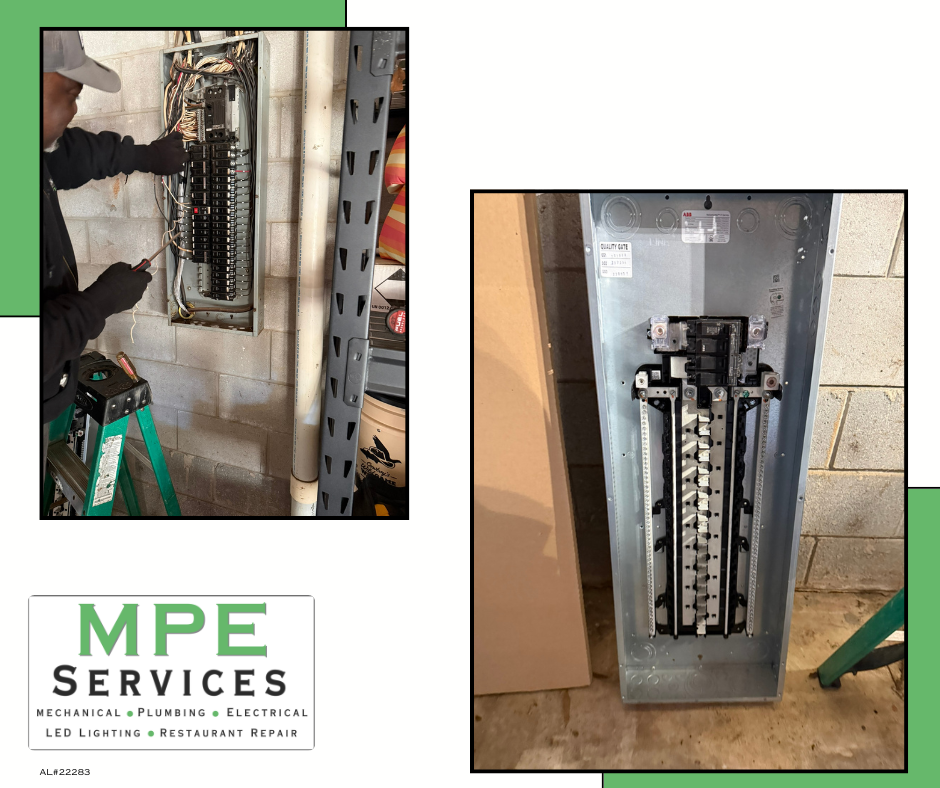
Is Your Home Keeping Up? Why Older North Alabama Homes Need an Electrical Panel Upgrade
From the historic properties in Huntsville to the mid-century ranches of Madison and Florence, our power demands have changed. If your lights are flickering or your breakers are constantly tripping, your home might be struggling to keep up. Discover why upgrading your electrical panel is the smartest safety move you can make this season.
From the stunning historic properties in the Twickenham district of Huntsville and the historic downtown of Florence, to the mid-century ranch homes scattered throughout Madison, North Alabama is full of neighborhoods with incredible character.
However, while older homes offer timeless architecture, their original electrical systems were never designed to handle the realities of 2026 living.
Between electric vehicle (EV) home chargers, high-efficiency heat pumps, modern kitchen appliances, and multiple family members streaming and gaming simultaneously, our daily power demands have skyrocketed. If your home still relies on its original electrical panel, it might be struggling to keep up.
What Exactly is an Electrical Panel?
Think of your electrical panel (often called a breaker box) as the traffic cop for your home’s electricity. It takes the main power line coming from your local utility provider and safely distributes it to separate circuits throughout your house.
If a circuit draws too much power, the breaker trips to stop the flow of electricity before the wires overheat and cause a fire.
4 Signs Your Home is Overdue for an Electrical Panel Upgrade
1. Flickering or Dimming Lights
Do your living room lights briefly dim when your air conditioner kicks on or when you run the microwave? This is a textbook sign that your current panel doesn't have the capacity to distribute power smoothly, causing a localized "brownout" in your own walls.
2. Constantly Tripping Breakers
Breakers are designed to trip for your safety. However, if you find yourself constantly walking down to the basement, garage, or hallway to flip a switch back on just because you tried to use a hairdryer and a space heater at the same time, your circuits are dangerously overloaded.
3. The Presence of Dangerous Outdated Brands
If your home was built between the 1950s and 1980s, check the brand name on your panel box door. If you see Federal Pacific (FPN) or Zinsco, you need an immediate inspection.
Safety Warning: These specific legacy brands are notorious for failing to trip during an overload, which has led to thousands of house fires nationwide. Many home insurance companies in Alabama will now refuse to renew policies until these specific panels are replaced.
4. You Are Still Using a Fuse Box
If your home uses screw-in glass fuses instead of flip-switch circuit breakers, your system is heavily outdated. Fuse boxes generally max out at 60 amps of power, whereas a standard modern home requires a minimum of 150 to 200 amps to operate safely and efficiently.
The Benefits of Upgrading Your Electrical Service
An electrical panel upgrade is one of the smartest investments you can make for your property. It provides:
Unmatched Safety: Brand new, highly sensitive circuit breakers dramatically lower the risk of electrical fires.
Room for Growth: Gives you the electrical capacity to confidently add an EV charger, hot tub, or remodel your kitchen.
Lower Insurance Premiums: Many insurance providers offer lower rates or concrete discounts once a certified electrician certifies that an outdated panel has been replaced.
Ensure Your Peace of Mind with Local Experts
Electrical work is never a DIY project. Upgrading a panel requires safely disconnecting the main power supply to the home, coordinating with local utility crews, and ensuring every circuit is perfectly balanced to meet local North Alabama building codes.
Whether you are preserving a historic gem or modernizing a family home, our licensed electricians are ready to inspect your system and provide a seamless, safe installation.
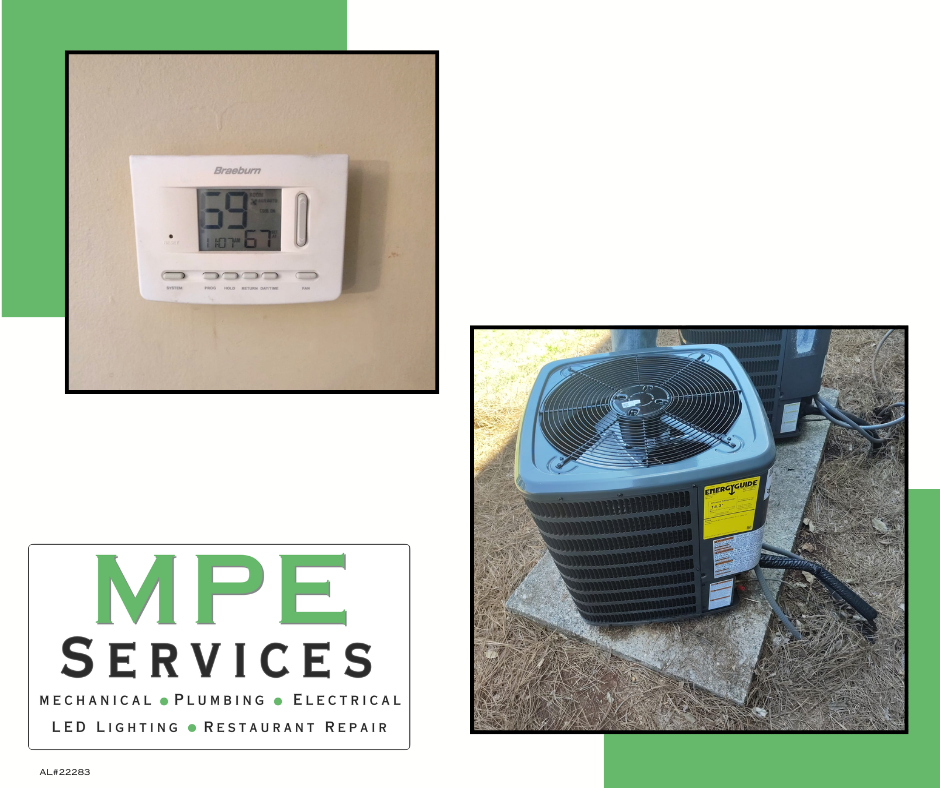
Why is My AC Turning On and Off Rapidly? Understanding Short-Cycling
When summer hits high gear in North Alabama, your air conditioner is the most important appliance in your home. Under normal conditions, an AC unit should run continuously until it cools your home to the thermostat setting, shut off for a while, and then start back up later.
But if you notice your system is turning on, running for just two or three minutes, shutting down, and then repeating the loop over and over—you are experiencing a phenomenon called short-cycling.
Short-cycling is a major warning sign. Not only does it destroy your home’s comfort, but it also spikes your electric bills and puts immense wear and tear on your equipment.
Why Short-Cycling is an HVAC Emergency
An air conditioning system uses the most electricity during its startup phase. When it cycles constantly, your power bill will skyrocket.
More importantly, your compressor—the expensive "heart" of your AC unit—isn't designed for constant stop-and-start operation. Ignoring a short-cycling system is the fastest way to turn a minor maintenance issue into a major, costly AC repair or a total system replacement.
The 4 Most Common Causes of AC Short-Cycling
1. A Heavily Clogged Air Filter
This is the simplest fix, but it's the cause of a massive percentage of service calls. When your air filter is packed with dust, pet dander, or pollen, it restricts the airflow into the system. The indoor cooling coils freeze up due to the lack of warm air, causing the system to automatically shut down to protect itself. Once the ice melts slightly, it starts up again, creating a vicious cycle.
2. Low Refrigerant Levels
Your system relies on a precise charge of refrigerant to pull heat out of your home. If there is a tiny leak in your coils, the drop in pressure can trip the system's low-pressure safety switch, cutting power to the compressor.
3. Faulty Thermostat Placement or Sensors
If your thermostat is located right next to a drafty window, an air vent, or a heat-producing appliance, it gets "confused." It thinks the house is cool before it actually is, shuts the AC down, and then quickly registers the heat again, triggering the unit back on.
4. The System is Over-Sized for Your Home
If you recently had a new unit installed by a company that didn't run proper load calculations, your AC might be too powerful. An oversized unit will blast a house with cold air so quickly that it shuts down before it has a chance to actually remove the humidity from the air, leaving your home feeling cold but damp and clammy.
How to Handle a Short-Cycling AC
If your system is short-cycling, turn it off at the thermostat immediately to prevent compressor burnout. Check your air filter—if it looks grey and choked with dust, swap it out for a clean one and see if the system returns to a normal run cycle.
If a clean filter doesn't fix the issue, the problem is likely internal, involving electrical controls or refrigerant pressure.
Schedule Your Summer Comfort Rescue
Don't spend your weekend suffering through the North Alabama heat with an unreliable system. Our certified NATE technicians are stationed right here across Huntsville, Madison, and Florence, ready to diagnose the root cause of your system's issues and get it running efficiently again.